DIY Garage Door Repairs: What Is Safe and What Is Not
A garage door is a large, heavy, mechanically complex system under significant tension. Some parts of it are safe for a careful homeowner to maintain and adjust. Others involve components under enough stored energy to cause serious injury if handled incorrectly.
Knowing the difference will save you money on unnecessary service calls, and potentially save you from a serious injury. Here is a clear breakdown of what you can do yourself, and what you must leave to a professional.
Safe DIY Tasks
- Replace remote batteries - if your remote has stopped working, replace the batteries first. This solves the problem more often than you would expect.
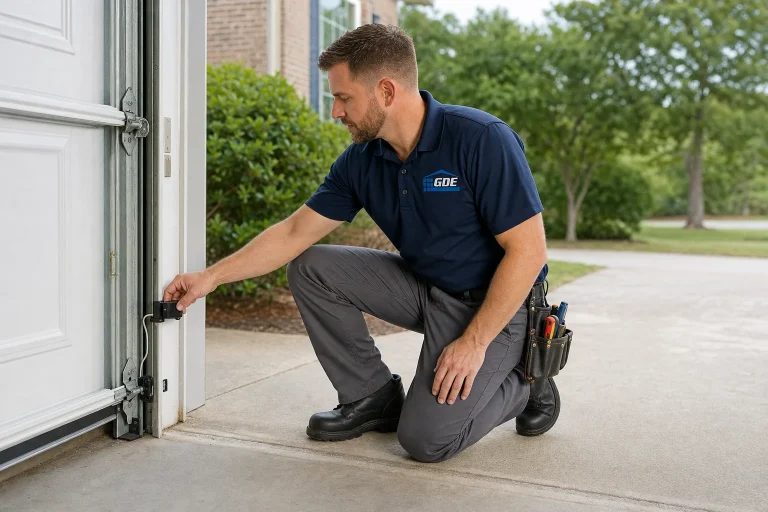
- Clean and align safety sensors - the photo-eye sensors near the floor can be knocked out of alignment or have their lenses obscured by dirt. Wipe the lenses clean and check that both sensors point directly at each other. Indicator lights should be solid, not blinking.
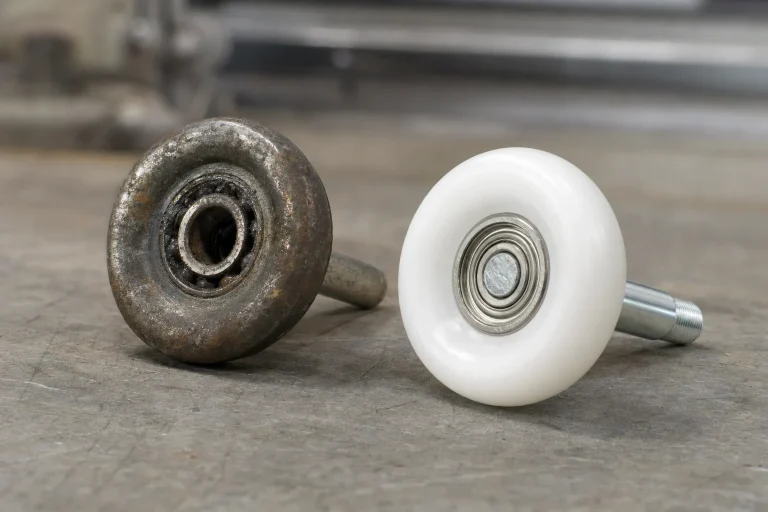
- Lubricate moving parts - apply a dedicated garage door lubricant (not WD-40, which is a solvent) to spring coils, hinge pivot points, roller stems, and the torsion spring shaft bearings. Do this every six months.
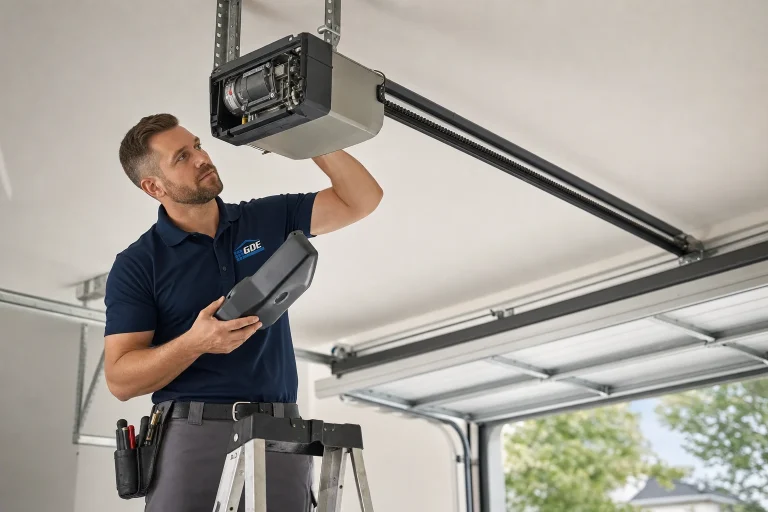
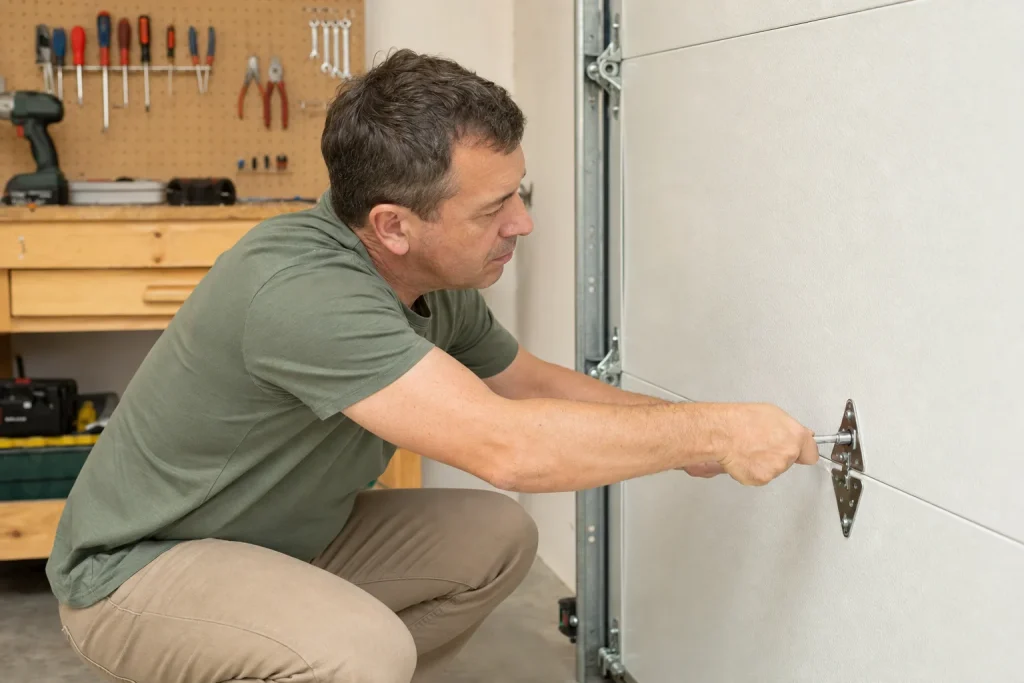
- Tighten loose hardware - vibration gradually loosens nuts and bolts on track brackets, hinges, and the opener rail. Check and snug these with a socket wrench twice a year.
- Replace weather seals - the bottom seal, side seals, and top seal can be replaced without specialist tools. Replacement seals are available from any hardware store.
- Reprogramme a remote or keypad - most opener brands have a simple reprogramming procedure in the owner manual or on the manufacturer website.
Tasks That Require a Professional
Do not attempt the following. The risk of injury or making the problem significantly worse is too high.
- Spring replacement or adjustment - torsion and extension springs are under extreme tension and can cause fatal injuries if they release unexpectedly. Specialist tools and training are required. Learn about spring replacement.
- Cable replacement - lift cables are under tension from the springs. Replacing a cable incorrectly can cause the door to fall or the spring to unwind suddenly.
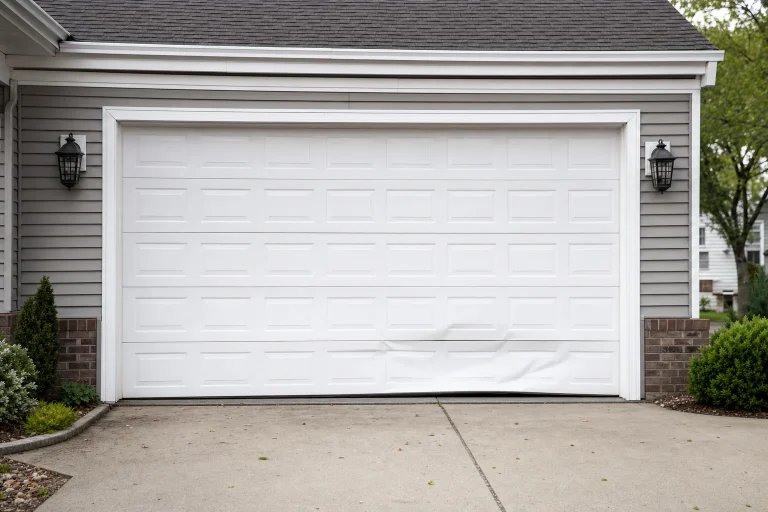
- Off-track repair - a door off its track can fall suddenly. Disconnect the opener and call a professional immediately.
- Bottom bracket replacement - bottom brackets are attached directly to the lift cables and are under tension even when the door is closed.
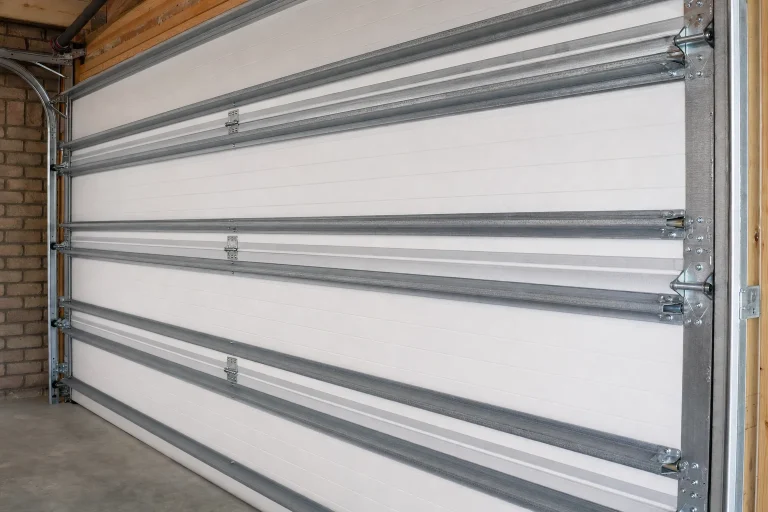
- Track replacement - replacing a track section requires managing door weight and spring tension. A two-person professional job.
The Balance Test
One useful diagnostic any homeowner can safely perform is the balance test. Pull the red emergency release cord to disconnect the opener. Lift the door manually to waist height and let go carefully. A correctly balanced door will stay in place. If it falls, the springs are under-tensioned. If it rises, they are over-tensioned. Call a professional for the adjustment.
When in Doubt, Call
Garage Door Enterprises gives honest assessments. If a problem is something you can genuinely fix yourself, we will tell you. If you are unsure whether a task is safe to DIY, call us and we will advise over the phone at no charge.
We provide same-day repair throughout Chesapeake, Virginia Beach, Norfolk, Portsmouth, Suffolk, and the wider Hampton Roads area. Call (757) 482-9350 or book online. View our maintenance service.