What Garage Door Rollers Do
Garage door rollers are the small wheels that carry the door up and down its tracks. A standard residential door has ten to twelve of them, mounted in the hinges and brackets along both sides. Every time the door moves, each roller spins under load.
Rollers are inexpensive parts, but they have a large effect on how the door behaves. Worn rollers make the door loud, make it shake, strain the opener, and in the worst case let the door leave the track. Garage door roller replacement is one of the most cost-effective repairs we carry out in Chesapeake, Virginia Beach, and across Hampton Roads.
Signs Of Worn Rollers
- Grinding, squealing, or rattling as the door travels. Our post on why your garage door is noisy covers other causes.
- A shaking or jerking door instead of a smooth, even lift.
- Rollers that slide rather than spin because the bearings have seized.
- Wobble - a wheel that tilts on its stem has worn out.
- Cracked, chipped, or flat-spotted wheels.
- Rust on the stems or bearings, common in coastal garages.
- A door that drifts to one side or rubs the track.
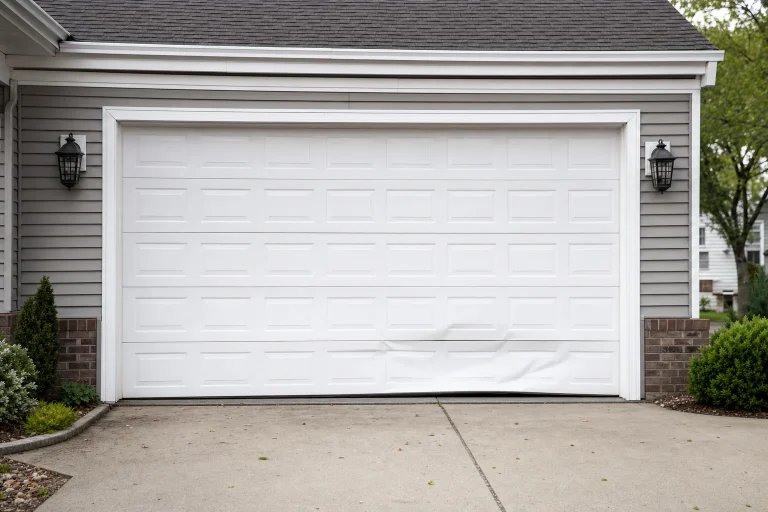
Ignored long enough, a failed roller can let a section drop out of the track. That turns a simple repair into a garage door off track emergency.
Nylon Or Steel Rollers
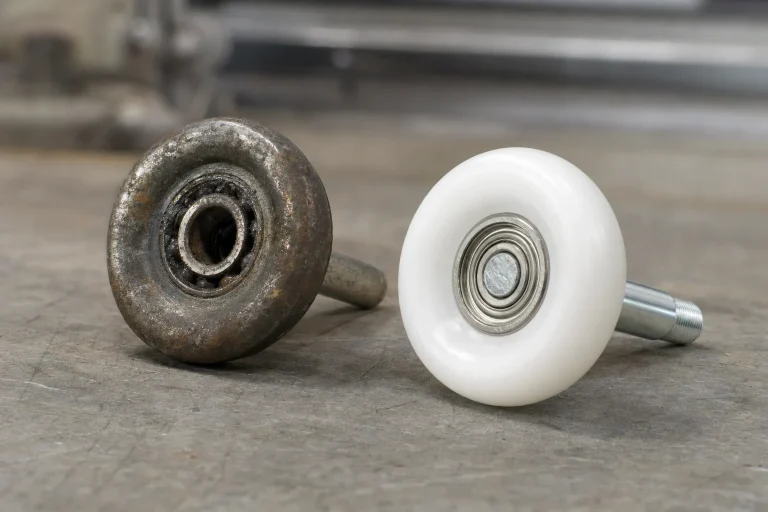
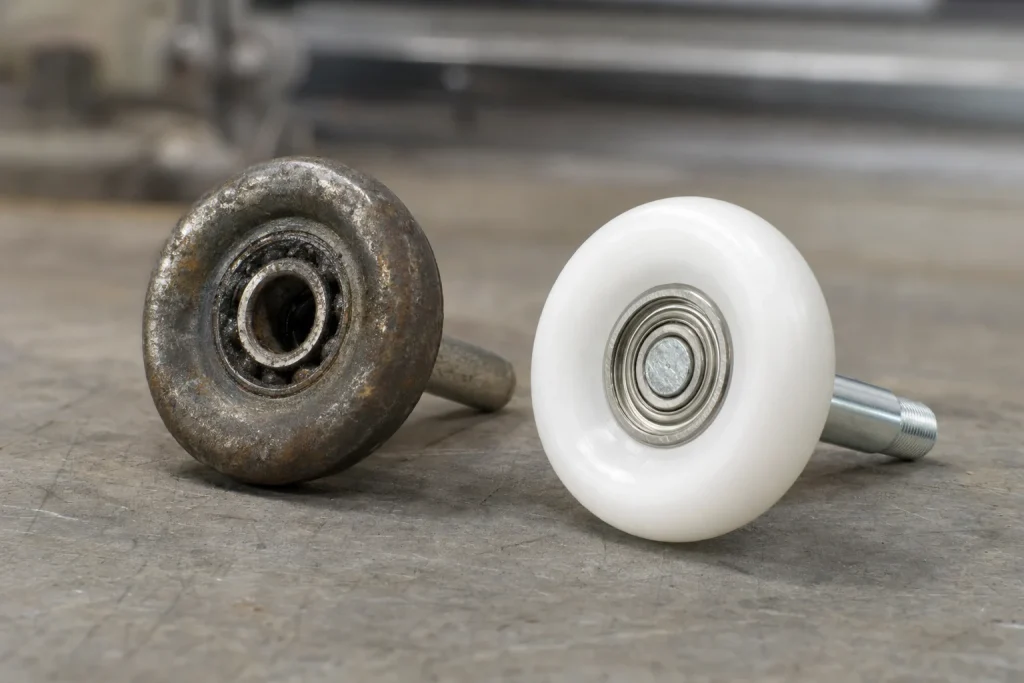
- Plastic rollers - fitted to many builder-grade doors. They have no ball bearings and wear out quickly.
- Steel rollers - strong and long-lasting, but louder. Open bearings need regular lubrication and can rust in salt air.
- Nylon rollers with sealed bearings - the quietest option. The sealed bearing keeps grit and moisture out, which matters in the humid, salty air of Virginia Beach, Cape Charles, and Currituck County.
For most homes we recommend sealed nylon rollers. They cost a little more than basic steel and are noticeably quieter, which matters most when a bedroom sits above or beside the garage.
Why Not DIY
Some rollers can be reached safely and some cannot. The bottom rollers sit in the bottom brackets, and those brackets are attached to the lift cables. The cables are under full spring tension whenever the door is closed. Loosening a bottom bracket can release that tension without warning and cause serious injury. Our guide to DIY garage door repairs explains which jobs are safe for a homeowner and which are not.
Replacing rollers on a door with a bent track or a worn hinge also hides the real problem. The new rollers will fail early for the same reason the old ones did.
What Replacement Involves
A Garage Door Enterprises technician replaces the full set, not just the worst one. Rollers wear at a similar rate, so a single new roller beside nine tired ones does little. During the visit we also:
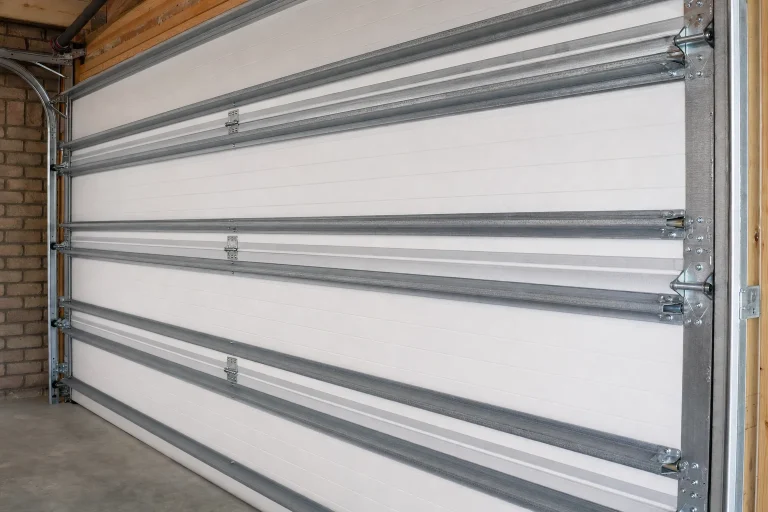
- Inspect the garage door tracks for dents, loose brackets, and misalignment.
- Check every hinge and replace any that are cracked or worn.
- Lubricate the bearings, hinges, and springs with the correct product.
- Check door balance and spring condition.
- Test the opener force settings and the safety reversal.
Most roller replacements are finished in a single visit and carry our two-year parts and labor warranty.
Making New Rollers Last
Lubricate steel roller bearings a few times a year with a silicone or lithium-based garage door lubricant. Do not use a general purpose penetrating spray, which strips lubricant rather than adding it. Do not grease the tracks, because grease collects dirt and makes rollers slide. An annual garage door maintenance visit keeps the whole system in step.
Call (757) 482-9350 or book an appointment for garage door roller replacement in Chesapeake, Virginia Beach, Norfolk, Portsmouth, Suffolk, and Smithfield. See all of our garage door repair services.
Common Questions
How long do garage door rollers last? It depends on the type and how often the door is used. Basic plastic rollers can wear out within a few years. Quality sealed nylon rollers last far longer with normal residential use.
Should all rollers be replaced at once? Yes. They wear together, and a mixed set gives uneven travel.
Will new rollers make my door quieter? In most cases, yes. Moving from worn steel or plastic to sealed nylon rollers is one of the biggest noise improvements you can make.