Why Weather Seals Matter
Garage door weather seals are the strips of rubber and vinyl that close the gaps around your door. They keep out rain, wind, dust, leaves, insects, and rodents, and they help an insulated door do its job. They are also among the first parts of a door to wear out.
In Hampton Roads the job is harder than in most places. Coastal storms drive rain sideways, humidity is high for much of the year, and salt air attacks rubber and metal alike. If you can see daylight under or around your closed door, the seals need attention.
Types Of Door Seals
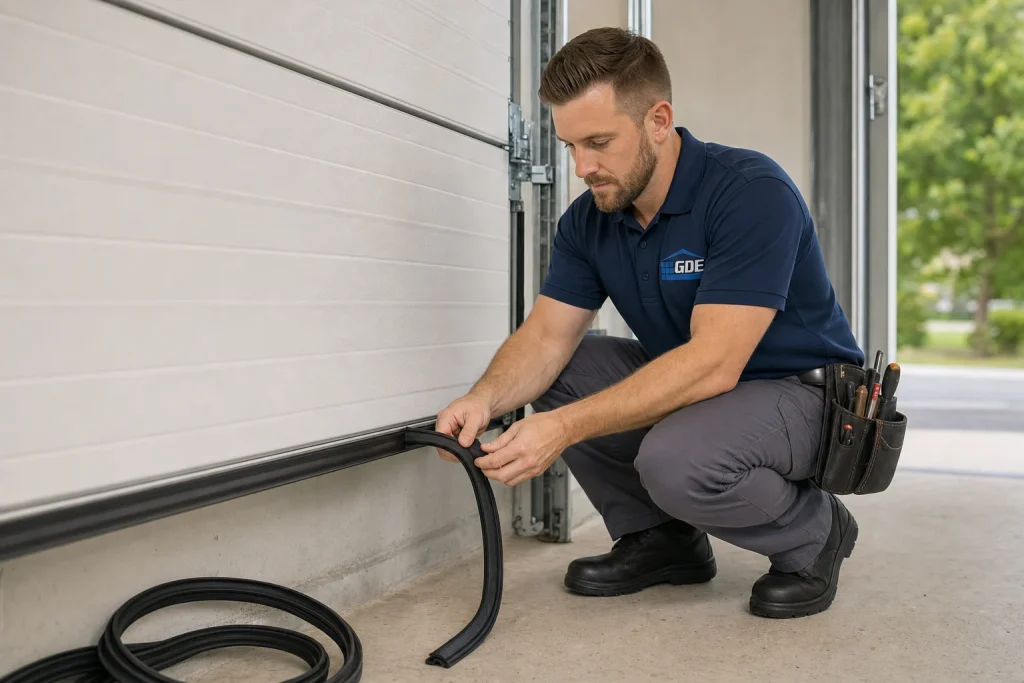
- Bottom seal - a flexible rubber or vinyl strip that slides into a retainer on the bottom edge of the door and compresses against the floor. Profiles include T-style, bulb, and bead.
- Bottom retainer - the aluminum or PVC channel that holds the bottom seal. A corroded or bent retainer has to be replaced with the seal.
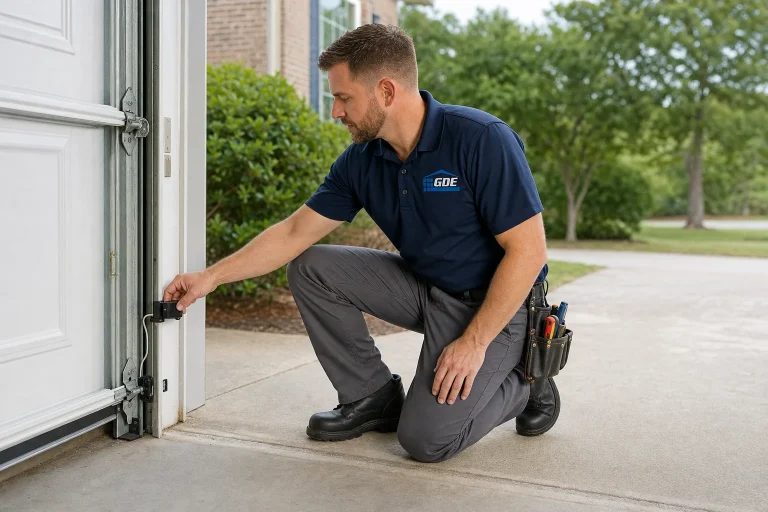
- Perimeter seal - also called stop molding. A strip with a flexible flap fixed to the jambs and header, which presses against the face of the closed door.
- Threshold seal - a raised strip bonded to the floor. Useful where the concrete has settled or slopes toward the garage.
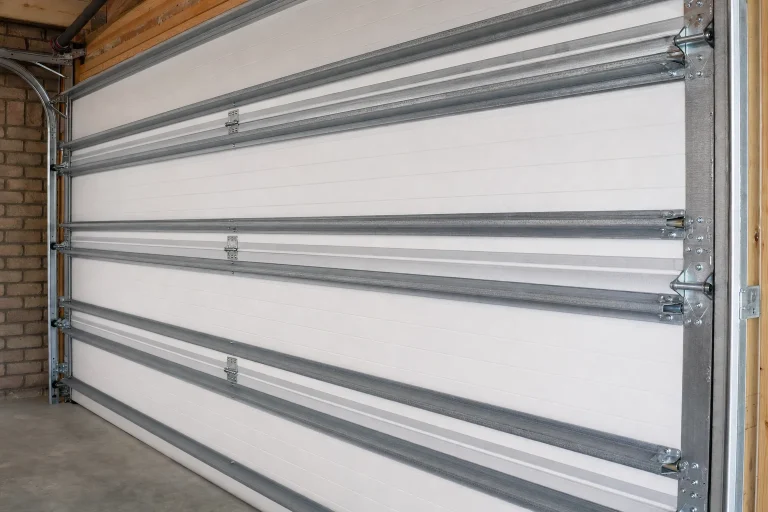
- Section seals - on insulated doors, the joints between sections are shaped or gasketed to block air.
- Brush seals - common on commercial doors and on the top edge of some residential doors.
Signs Your Seals Failed
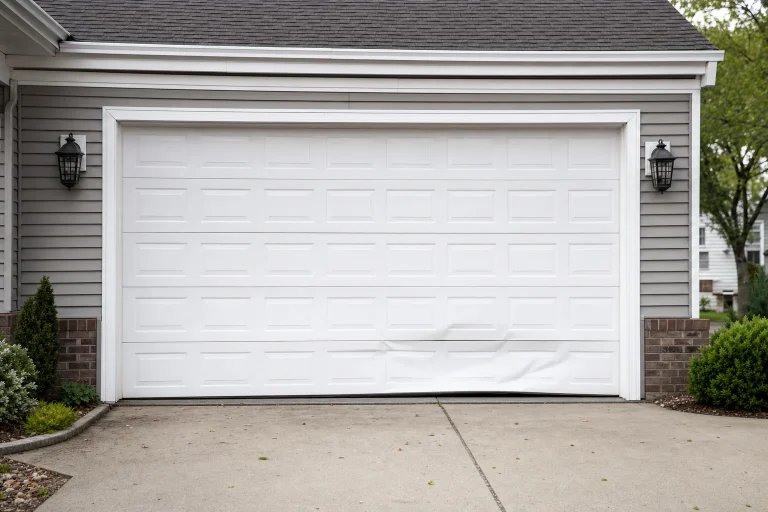
- Daylight visible along the bottom or sides of the closed door.
- Water, sand, or leaves just inside the threshold after wind or rain.
- A bottom seal that is flat, brittle, cracked, or torn.
- Insects, spiders, or signs of mice in the garage.
- A garage that is much hotter or colder than it used to be.
- Side seals that have shrunk, curled away from the door, or been chewed.
- A door that freezes to the floor in winter because water is collecting at the seal.
Bottom Seal Not Sealing?
A new seal does not always fix a gap. If the gap is larger on one side than the other, the floor has probably settled, or the door is hanging out of level because of a stretched cable or tired spring. An oversized bottom seal or a threshold seal can take up an uneven floor. A door that is out of level needs garage door repair first.
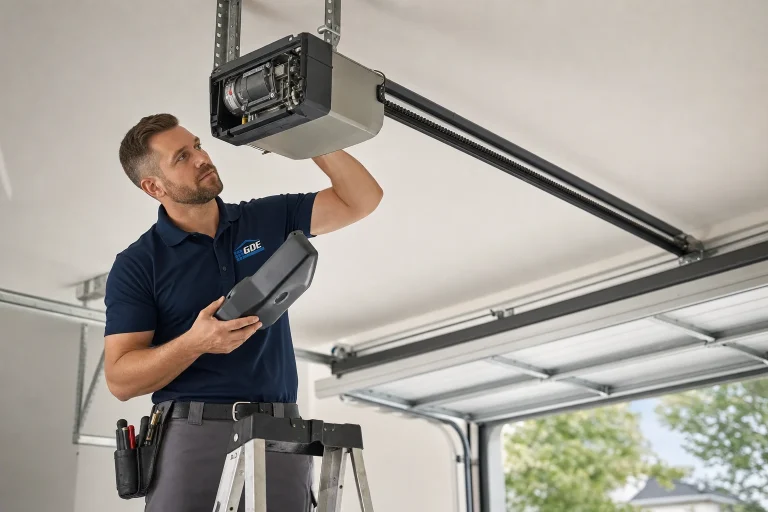
The opener’s down limit also matters. If the door stops slightly short, the seal never compresses. If it travels too far, the seal is crushed and the door may reverse. Adjusting the limit correctly is part of every seal replacement we do.
Why Seals Wear Faster Here
Sunlight on a south or west facing door dries out vinyl and rubber. Salt air corrodes aluminum retainers until the seal no longer slides or stays put. Standing water at the threshold speeds up both. Homes in Virginia Beach, Cape Charles, Elizabeth City, and along the Currituck Sound should have seals checked every year.
Professional Seal Replacement
Seal replacement is quick when the right profile is on the truck. A Garage Door Enterprises technician will:
- Identify the retainer type and fit the matching seal profile.
- Replace corroded or damaged retainers.
- Fit new perimeter seal to the jambs and header, set to the correct pressure against the door.
- Check that the door is level and balanced.
- Reset the opener travel limits and test the safety reversal.
It is an ideal job to combine with an annual garage door maintenance visit. Our maintenance checklist shows everything a tune-up covers.
If your door is single-layer and uninsulated, new seals help, but an insulated garage door makes a far bigger difference to comfort.
Call (757) 482-9350 or book an appointment for garage door weather seal replacement in Chesapeake, Virginia Beach, Norfolk, Portsmouth, Suffolk, Smithfield, and Currituck County, NC.
Common Questions
How often should the bottom seal be replaced? There is no fixed interval. Inspect it once a year and replace it when it is flat, cracked, or no longer closes the gap.
Can I replace the seal myself? A bottom seal that slides into a sound retainer is within reach of a capable homeowner. Retainer replacement, uneven floors, and limit adjustments are better left to a technician.
Will new seals lower my energy bills? They reduce drafts, which helps most when the garage is attached to the house or has a room above it.